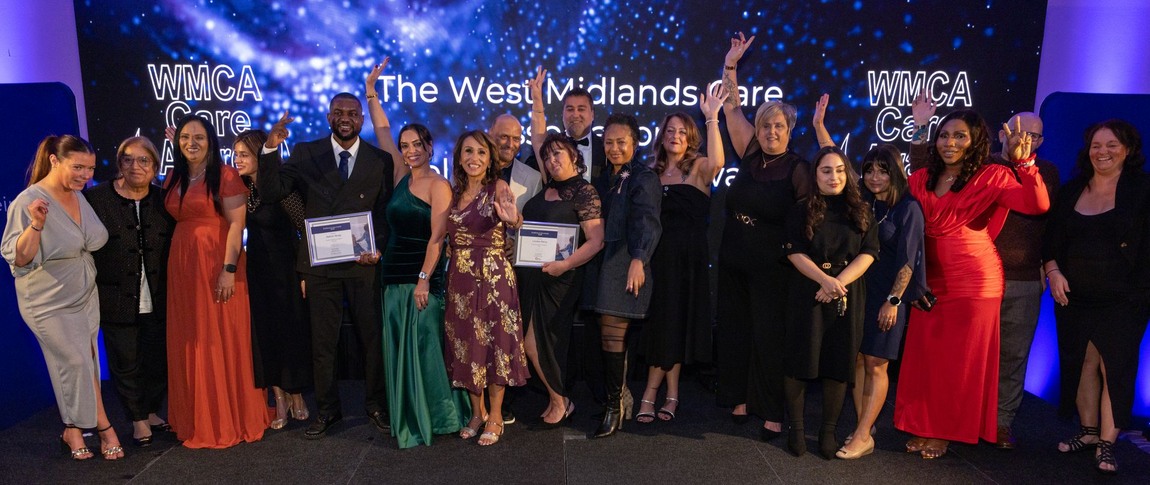



The West Midlands Care Association has been the voice of the care industry within the region for over twenty years. The Association offers the crucial support care providers require to deliver sustainable excellence within community, nursing, special needs and residential home settings.


Quick Links


Membership of the West Midlands Care Association offers a raft of advantages to all types of care providers. We offer a comprehensive suite of support services that allow you to concentrate on providing top quality care. Find out more about what we do, or join our membership by clicking the buttons below

Th


WMCA West Midlands Adult Social Care Skills Summit


1 October 2026

Bescot Stadium

Walsall


More Details and Book

Digital Health Checks


As part of the national Better Security Better Care programme, we are offering FREE in-person Digital Health Check visits to review your data protection and cyber security policies.


Digital Health Checks

WMCA Now offers Oliver McGowan Training

WMCA have partnered with local training providers to offer our members both Tier 1 and Tier 2 Awareness of Learning Disability and Autism Training (Oliver McGowan Training).


Oliver McGowan Training


WMCA Excellence

in Care Awards

2026

The Nomination Window has Opened!

We are pleased to announce that this years WMCA Excellence in Care Awards are now open!


Each winner will win a personalised trophy and £500 in cash!


Anyone who nominates will also be entered into a prize draw to win one of five £100 Amazon vouchers


The nomination window will close on 31 July 2026 so get nominating!!!!


FIND OUT MORE

Days to nominate:

:
:
:
Days
Hours
Minutes
Seconds

www.excellencein.care

WMCA Pimp My Zimmer  Competition

This years winner!


Zimmer Frames are a part of life for many older people but sometimes - particularly if they have dementia - they don't like using them as they cannot associate with them.


Research has shown that you can encourage your residents and service users to use their Zimmer Frame by decorating them with items or a theme that means something to them.


Every year we hold our Pimp My Zimmer Contest to encourage this and we are pleased to announce this years winner is Church Rose Nursing Home in Handsworth Birmingham


More Details

West Midlands Care Association DBS Service


Fast online criminal records checks


West Midlands Care Association DBS System

The WMCA DBS System allows employers to submit electronic applications and quickly receive the results.

WMCA offer Care Providers a self administered system which can be accessed 24 hours a day. Users have their own secure control panel from where they can add new candidates, monitor the progress of their applications and more importantly see the results as they come in.


Most importantly our staff understand the Care Industry so can answer your DBS questions in a way generic services cannot


WMCA members receive a substantial discount on each search compared to our standard prices

For more information click the buttons on the right


Members Area


Our exclusive members only area of the website includes lots of resources only available to our members including how to access the FREE member HR and Legal Helplines, other supplier discounts and advice pages (password required)


MEMBERS AREA

You will need to register to access the members area of the website


WMCA Members WhatsApp Group

We have set up a members Whatsapp group, which will enable us to update you with:


  • Our latest events
  • Our latest updates, including added membership benefits and new partnerships that you can benefit from
  • Latest sector news
  • An opportunity to network with other members and get support


If you would like to be added to this Whatsapp group, click on the button below, read the Terms of Reference and fill in the details on the form (Requires Members Password)

The Care Association Alliance

The national voice of local care provision

The Care Association Alliance (CAA) is a collective of local care associations - including WMCA - from across England representing nearly 10000 care providers.


Established to strengthen the voice of independent adult social care providers, the CAA serves as a vital link between local services and national policy-makers.


West Midlands Care Association was one of the founding members of the CAA, and through it our own members benefit from being part of a nationwide collective network and having their voice heard by national government.


For more information about the CAA,  and how through your WMCA membership you have a national voice, please click
here


CAA News
July 16, 2026
Care Association Alliance sets out a national funding model for adult social care, designed to give families certainty, providers stability, and councils the resources to do their job (read the full repo rt here ) A new CAA report proposes pooling the financial risk of an ageing population nationally, rather than leaving it with 153 individual councils. The core of the model: ring-fenced national funding shared on a needs-based formula, a national tariff for care, and an independent body to keep it honest. Individuals keep a means-tested contribution, but with a lifetime cap and a raised capital threshold, so no one faces unlimited costs or has to sell their home. Councils keep assessment, planning, safeguarding and oversight, but are relieved of carrying a national demographic risk on a local budget. Backed by the Rt Hon Damian Green, Chair of the Social Care Foundation and former Deputy Prime Minister responsible for social care policy. The Care Association Alliance (CAA) has published a proposal for how England should fund adult social care for older people. Its report, Adult Social Care Funding Reform, describes a national funding settlement built on a straightforward idea: the cost of growing old and needing care is a national risk, and it should be met nationally, while care itself continues to be arranged and delivered locally. A national risk carried on local budgets At present, primary responsibility for adult social care sits with 153 local authorities under the Care Act 2014. They assess need, commission services and manage local provider markets. They also carry the full financial weight of demographic change, a pressure that is national in scale and rising quickly. The number of people aged 85 and over is projected to double within twenty years, and the Office for Budget Responsibility estimates that simply maintaining today's system will require public spending on social care to grow by 3.1 per cent a year over the next decade, compared with the 0.7 per cent average delivered between 2009/10 and 2022/23. That pressure shows up directly in the price of care. On average, councils pay £24.10 an hour for home care, while the Homecare Association puts the minimum sustainable rate at £32.14. The National Audit Office found in 2021 that authorities were commissioning care at below the sustainable cost of care, and the King's Fund reports that in 2025/26, council fee increases of around 5 per cent were outpaced by provider cost increases of 8 to 10 per cent. This is not a matter of councils choosing to underpay. It is what happens when local budgets are asked to absorb a national cost. Providers take the strain through thinner margins and deferred investment, and families often meet it through the higher fees paid by those who fund their own care, on average 41 per cent more than the council-funded rate. One settlement, built as a system The CAA argues that these are symptoms of a single structural mismatch, and that they need to be fixed together. Its proposed national funding settlement rests on three principles: pooling the financial risk of demographic change nationally, a statutory entitlement to support triggered by assessed need, and continued local delivery within a national framework. In practice, the settlement has five main components: A ring-fenced national care grant , distributed to councils on a needs-adjusted formula, so that funding follows need rather than local fiscal capacity. A reformed means test , with a raised capital threshold, frozen at £23,250 since 2010/11, and a lifetime cap on what any individual can be asked to pay. A national tariff for residential and home care , set at the independently assessed cost of sustainable provision, which councils commission at or above. A bundled funding model for residential care , with assessed packages that are portable when people move. A reformed Deferred Payment Agreement scheme , so that no one is required to sell their home to pay for residential care. Underpinning the settlement is an independent National Care Assessment Body, sitting outside both the NHS and local government, which would verify the cost evidence, review the tariff and report where provision falls short. Local authorities retain their role as commissioners and delivery leaders, close to their communities and provider markets, but are relieved of being the sole bearer of national financial risk. The report is explicit about what it does not propose. This is not a free care service on the model of the NHS, and it does not absorb social care into the health service. Individuals who can contribute to the cost of their care will continue to do so, within a reformed means test and a lifetime cap. The word national describes the funding architecture, not the way care is provided. The proposal is offered as a contribution to the Casey Commission, which is beginning to test public views on who should receive care, what the state should guarantee and what individuals should contribute. The CAA says funding reform is the necessary first step, and Adult Social Care Funding Reform is the first in a programme of papers it will publish over the coming months. Melanie Weatherley MBE, Co-Chair of the Care Association Alliance, said: “No family should receive worse care because of where they happen to live, and no provider should have to choose between keeping a contract and delivering care safely. These are not failings of the people running the system. They are what happens when a national risk is carried on local budgets. If we fund care nationally, price it honestly through a national tariff, and ask an independent body to keep it that way, we can give families certainty, providers stability, and councils the resources to do the job they are asked to do. “This paper is not a criticism of local authorities, who are doing a demanding job under real pressure. It is a practical plan to put the whole system on a sustainable footing, and we hope it is useful to Baroness Casey's commission as it begins its work.” The Rt Hon Damian Green, Chair of the Social Care Foundation and former Deputy Prime Minister responsible for social care, said: “The case for reform is widely accepted. What has been missing is a workable, affordable plan that a government of any colour could adopt. This paper offers exactly that, and a cross-party route to deliver it.” (read the full report here ) ENDS Notes to editors The Care Association Alliance is the national umbrella body for local care associations in England, a member-led organisation with more than 50 local care associations, collectively representing over 10,000 independent care providers across every English region. It is a founding participant in the Care Provider Alliance. The £24.10 per hour figure is a national average local authority domiciliary care fee, not a per-council figure. It is cited alongside the Homecare Association's minimum sustainable rate (£32.14), the National Audit Office's 2021 finding on below-sustainable-rate commissioning, and the King's Fund's 2025/26 fee-versus-cost analysis, all set out in full in Adult Social Care Funding Reform (Paper One), published [DATE] 2026. Additional figures are drawn from the Health Foundation REAL Centre, the OBR, the King's Fund, the IFS and Social Care 360. The funding-gap projection runs to 2032/33. Baroness Casey's remarks were made on 7 July 2026, in a BBC Radio 4 Today interview and a speech to the Local Government Association's annual conference, in which she confirmed the Casey Commission will begin testing the views of the public this month ahead of its first report, due this year. Spokespeople are available for interview. Media enquiries: Melanie Weatherley MBE, Co-Chair of the Care Association Alliance.


Latest News and Useful Information


WMCA News

July 16, 2026
Care Association Alliance sets out a national funding model for adult social care, designed to give families certainty, providers stability, and councils the resources to do their job (read the full repo rt here ) A new CAA report proposes pooling the financial risk of an ageing population nationally, rather than leaving it with 153 individual councils. The core of the model: ring-fenced national funding shared on a needs-based formula, a national tariff for care, and an independent body to keep it honest. Individuals keep a means-tested contribution, but with a lifetime cap and a raised capital threshold, so no one faces unlimited costs or has to sell their home. Councils keep assessment, planning, safeguarding and oversight, but are relieved of carrying a national demographic risk on a local budget. Backed by the Rt Hon Damian Green, Chair of the Social Care Foundation and former Deputy Prime Minister responsible for social care policy. The Care Association Alliance (CAA) has published a proposal for how England should fund adult social care for older people. Its report, Adult Social Care Funding Reform, describes a national funding settlement built on a straightforward idea: the cost of growing old and needing care is a national risk, and it should be met nationally, while care itself continues to be arranged and delivered locally. A national risk carried on local budgets At present, primary responsibility for adult social care sits with 153 local authorities under the Care Act 2014. They assess need, commission services and manage local provider markets. They also carry the full financial weight of demographic change, a pressure that is national in scale and rising quickly. The number of people aged 85 and over is projected to double within twenty years, and the Office for Budget Responsibility estimates that simply maintaining today's system will require public spending on social care to grow by 3.1 per cent a year over the next decade, compared with the 0.7 per cent average delivered between 2009/10 and 2022/23. That pressure shows up directly in the price of care. On average, councils pay £24.10 an hour for home care, while the Homecare Association puts the minimum sustainable rate at £32.14. The National Audit Office found in 2021 that authorities were commissioning care at below the sustainable cost of care, and the King's Fund reports that in 2025/26, council fee increases of around 5 per cent were outpaced by provider cost increases of 8 to 10 per cent. This is not a matter of councils choosing to underpay. It is what happens when local budgets are asked to absorb a national cost. Providers take the strain through thinner margins and deferred investment, and families often meet it through the higher fees paid by those who fund their own care, on average 41 per cent more than the council-funded rate. One settlement, built as a system The CAA argues that these are symptoms of a single structural mismatch, and that they need to be fixed together. Its proposed national funding settlement rests on three principles: pooling the financial risk of demographic change nationally, a statutory entitlement to support triggered by assessed need, and continued local delivery within a national framework. In practice, the settlement has five main components: A ring-fenced national care grant , distributed to councils on a needs-adjusted formula, so that funding follows need rather than local fiscal capacity. A reformed means test , with a raised capital threshold, frozen at £23,250 since 2010/11, and a lifetime cap on what any individual can be asked to pay. A national tariff for residential and home care , set at the independently assessed cost of sustainable provision, which councils commission at or above. A bundled funding model for residential care , with assessed packages that are portable when people move. A reformed Deferred Payment Agreement scheme , so that no one is required to sell their home to pay for residential care. Underpinning the settlement is an independent National Care Assessment Body, sitting outside both the NHS and local government, which would verify the cost evidence, review the tariff and report where provision falls short. Local authorities retain their role as commissioners and delivery leaders, close to their communities and provider markets, but are relieved of being the sole bearer of national financial risk. The report is explicit about what it does not propose. This is not a free care service on the model of the NHS, and it does not absorb social care into the health service. Individuals who can contribute to the cost of their care will continue to do so, within a reformed means test and a lifetime cap. The word national describes the funding architecture, not the way care is provided. The proposal is offered as a contribution to the Casey Commission, which is beginning to test public views on who should receive care, what the state should guarantee and what individuals should contribute. The CAA says funding reform is the necessary first step, and Adult Social Care Funding Reform is the first in a programme of papers it will publish over the coming months. Melanie Weatherley MBE, Co-Chair of the Care Association Alliance, said: “No family should receive worse care because of where they happen to live, and no provider should have to choose between keeping a contract and delivering care safely. These are not failings of the people running the system. They are what happens when a national risk is carried on local budgets. If we fund care nationally, price it honestly through a national tariff, and ask an independent body to keep it that way, we can give families certainty, providers stability, and councils the resources to do the job they are asked to do. “This paper is not a criticism of local authorities, who are doing a demanding job under real pressure. It is a practical plan to put the whole system on a sustainable footing, and we hope it is useful to Baroness Casey's commission as it begins its work.” The Rt Hon Damian Green, Chair of the Social Care Foundation and former Deputy Prime Minister responsible for social care, said: “The case for reform is widely accepted. What has been missing is a workable, affordable plan that a government of any colour could adopt. This paper offers exactly that, and a cross-party route to deliver it.” (read the full report here ) ENDS Notes to editors The Care Association Alliance is the national umbrella body for local care associations in England, a member-led organisation with more than 50 local care associations, collectively representing over 10,000 independent care providers across every English region. It is a founding participant in the Care Provider Alliance. The £24.10 per hour figure is a national average local authority domiciliary care fee, not a per-council figure. It is cited alongside the Homecare Association's minimum sustainable rate (£32.14), the National Audit Office's 2021 finding on below-sustainable-rate commissioning, and the King's Fund's 2025/26 fee-versus-cost analysis, all set out in full in Adult Social Care Funding Reform (Paper One), published [DATE] 2026. Additional figures are drawn from the Health Foundation REAL Centre, the OBR, the King's Fund, the IFS and Social Care 360. The funding-gap projection runs to 2032/33. Baroness Casey's remarks were made on 7 July 2026, in a BBC Radio 4 Today interview and a speech to the Local Government Association's annual conference, in which she confirmed the Casey Commission will begin testing the views of the public this month ahead of its first report, due this year. Spokespeople are available for interview. Media enquiries: Melanie Weatherley MBE, Co-Chair of the Care Association Alliance.
June 29, 2026
This week, we published our annual ‘Size and structure of the adult social care sector and workforce in England’ report . It provides a comprehensive overview of the size and composition of the adult social care workforce and includes information relating to workforce supply and demand, international recruitment, and statistics on the wider economy. Read more about the report in the workforce intelligence section below. The Government is seeking views on reforms to zero hours and similar contracts to implement measures in the Employment Rights Act 2025 to end one-sided flexibility. The consultation is your opportunity to share feedback on how the reforms, including the right to guaranteed hours, reasonable notice, and short notice payments, should be implemented and ensure that the views of the adult social care sector are represented. The consultation closes on Tuesday 25 August at 23:59. You can read the impact assessments on the reforms to inform your response : Impact assessment: Right to Guaranteed Hours and Impact assessment: ZHC - Right to Reasonable Notice of Shift Patterns and Payment for Shifts Cancelled, Moved or Curtailed at Short Notice
June 8, 2026
Artificial intelligence in health and social care: CQC's role, expectations and plans 
More News

Latest news from the DHSC

For the lastest and past annoucements from the DHSC, including guidance and directives please click the button below


Members password required


DHSC Archive

Latest news from CQC

For the lastest and past annoucements from CQC, including guidance and directives please click the button below


Members password required


CQC Archive


Social Media


Our Social Media feeds are updated daily with the latest news from the association and from around the care industry

To get the latest uptodate news and notifications of our events, follow us on Facebook and Linkedin by clicking the links below.


If you are a WMCA member you can also join the members WhatsApp group by clicking the WhatsApp logo.


Newsletters


WMCA publishes a weekly members newsletter with government updates and whats new in the industry and the Care Association. 


You can access the archive by clicking on the button below (requires members password)


WMCA Newsletter Archive

Facebook Feed


Advice to Care Providers

At WMCA we try to keep our members up to date of new developments in the industry on a regulatory level or just general advice on business matters


Local Authority Information

If you are looking for information about any of the local authority areas that we cover, this is available within the members area of the website


LOCAL AUTHORITIES

Advice to New Providers

Setting up a new care service can be daunting. Once you've completed your CQC registration, what do you do next?

Click on the button below to access some advice for new adult social care providers, which we hope is useful.


NEW PROVIDERS

Advice on Business Issues

Whether you are setting up a new business or running an established one, the care sector presents a unique set of challenges


We have produced information pages which are designed to help you with numerous business challenges, such as marketing, cost control and business continuity

BUSINESS ADVICE

Advice on Recruiting

Recruitment and Retention are perennial issues for the care sector


The Care Association has been advising its members for many years on various elements of recruitment and we also work with trusted partners who can help you.


We have produced  information pages which are designed to help you with numerous recruitment challenges.


RECRUITING

Advice on Regulation

Adult Social Care is one of the most heavily regulated sectors of industry and the legislation can be a minefield.


We operate Free helpines for members on HR and Legal Matters.


We have produced information pages which are designed to help you with numerous challenges.


REGULATION

Advice: Open Consultations

Click the button below to see a list of current open government agency consultations that affect the care industry


CONSULTATIONS


International Recruitment Support

www.wmca.international


Although recruiting overseas workers to the care sector has now been severely restricted by the Government, there are funded resources to support existing International Recruits in the West Midaands.


The West Midlands Care Association is working in partnership with other Care Associations,  West Midlands ADASS, West Midlands Employers, Local Authorities and the independent provider sector, to provide international recruitment support across the region

Regional Recruitment Hub

This Hub has been developed to provide information, advice and guidance on international recruitment to the adult social care sector. It has been developed for both providers of adult social care and councils operating in the West Midlands and offers Free advice including legal and HR

WM HUB

Webinars

This Hub is delivering a program of International recruitment webinars which are free to attend for West Midlands based care providers. Details are available on our events pages

Looking to recruit?

Are you a care provider with a valid sponsorship license who is looking to recruit? There may be people already here looking for alternative employment


We are working with displaced individuals who are looking for work. If you are interested in potentially employing any of these individuals then please register your details with us


REGISTER

Additional Advice

We have pulled together additional international recruitment advice for our members. details of which can be accessed below (requires members password)


OTHER ADVICE


Digital Care Support and Security

www.wmca.digital

Care is becoming more digital and it can be confusing when you are a provider what each system does and how it can benefit you.


West Midlands Care Association has numerous resources to help you on your digital journey


NEW:

Digital Health Checks

As part of the national Better Security Better Care programme, we are offering FREE in-person Digital Health Check visits to review your data protection and cyber security policies.


We believe that having a Digital Health Check could provide several important benefits for care providers


Digital Health Checks

Need Help with the DSPT?

Better Security, Better Care is a national and local support programme to help adult social care providers to store and share information safely. It covers paper and digital records and focuses on helping care providers to complete the Data Security and Protection Toolkit (DSPT) – the annual, online self-assessment.


All CQC-regulated adult social care providers in England must complete the DSPT. This is a legal requirement under the Health and Social Care Act 2012, as amended by the Health and Care Act 2022. 


West Midlands Care Association is your local support organisation, and offers a raft of online resources, workshops and one to one support, all of which is FREE  to CQC registered providers. 


DSPT Support

Upcoming Digital Support webinars


We run regular webinars on Digital issues including completing the DSPT which are completely free of charge


Within these listings we also advertise webinars from national organisations like Digital Care Hub that we think are useful for our members


If you are looking for more general training on data security for your staff, we suggest Digital Care Hubs free training offer



July 27, 2022
22 July 2026 10.00am - 10.30am
July 26, 2022
22 July 2026 2.30pm - 3.30pm
July 25, 2022
23 July 2026 12.00pm - 1.00pm
More Digital Support Webinars
Events and Training


Events and Training
www.wmca.events


  • Slide title

    Write your caption here
    Button
  • Slide title

    Write your caption here
    Button
  • Slide title

    Write your caption here
    Button
  • Slide title

    Write your caption here
    Button
  • Slide title

    Write your caption here
    Button
  • Slide title

    Write your caption here
    Button

Upcoming events

West Midlands Care Association runs events and training for our members and the wider care industry throughout the year

You can see a list of our upcoming events and training on the right hand side of this page.


Workshops

We organise workshops in partnership with trusted suppliers and partners  to cascade information and training about new or upcoming legislation. 


Digital Support


We run weekly sessions on helping care providers understand their responsibilities under current data protection legislation, you will also find details of any national webinars through DIgital Care Hub or the Cyber Resillience Centres


Conferences

WMCA run several large scale conferences each year, aimed at Care Homes and Domicilicary Care providers. They are a great opportunity to network with other providers and meet representatives from local authorities, health and suppliers from across the West Midlands
.


Registered Managers Networks


The Registered Managers networks are administered through Skills for Care.


Details of upcoming network meetings are available on this page. The events are not organised by WMCA and bookings must be made directly with Skills for Care


For further detaills of the networks in your area, click here



July 27, 2022
22 July 2026 10.00am - 10.30am
July 26, 2022
22 July 2026 2.30pm - 3.30pm
July 25, 2022
23 July 2026 12.00pm - 1.00pm
July 5, 2022
29 July 2026 10.00am - 10.45am
June 25, 2022
5 August 2026 10.00am - 10.45am
More Events

NEW: WMCA Training

Upcoming Training Sessions - www.wmca.training


WMCA can now offer our members a range of regular training courses  to ensure both your new and existing members of staff are well equiped to carry out their roles. 


STOP PRESS
We are now offering management courses and train the trainer sessions.


click here for more details


Oliver McGowan Training

(Learning Disability and Autism Awareness)

Oliver McGowan Training

(Tier 1 and 2) now available.


WMCA have partnered with several local training providers to offer our members both Tier 1 and Tier 2 Awareness of Learning Disability and Autism Training (Oliver McGowan Training)

The Government have also made funding available through the LDSS to go towards covering the costs

Our member price is within the LDSS funding envelope so you can reclaim the full costs


Click  here for more details

July 1, 2022
5 August 2026 9.30am - 4.30pm Longbridge Birmingham
September 1, 2021
14 October 2026 10.00am - 1.00pm
May 1, 2021
27 October 2026 9.30am - 4.30pm Longbridge Birmingham
More Dates

Care Certificate Training

These courses are delivered by our staff - who all have prevous experience of delivering care sectror training - on a regular basis and details of these courses are one our main training pages.


Members benefit from reduced rates


August 1, 2022
21 July 2026 10.00am - 1.00pm
July 10, 2022
27-28 July 2026 10.00am - 4.00pm Longbridge Birmingham
July 1, 2022
5 August 2026 9.30am - 4.30pm Longbridge Birmingham
More Dates

Management Training

We also offer a suite of training modules that are aimed at managers, deputies, seniors, team leaders or any staff who are being developed into a management or supervisory role


Click herefor more details

March 15, 2022
23 September 2026 10.00am - 4.00pm
July 1, 2021
20 October 2026 10.00am - 4.00pm
September 1, 2020
2 December 2026 10.00am - 4.00pm,

Train the Trainer

We can offer Train the Trainer sessions on various subjects. 


These intense courses will equip your training staff to successfully deliver the course content to your other care staff. Click here for more details

July 10, 2022
27-28 July 2026 10.00am - 4.00pm Longbridge Birmingham


IHSCM Events

Institute of Health and Social Care Management
FREE Membership for WMCA Members

www.ihscm.org.uk


The IHSCM is a place for social care and health managers/staff/students to learn, share, and create. It's a supportive environment that aims to provide you with the resources you need whilst also empowering you to share your knowledge with other members.


WMCA is a hub for IHSCM, ensuring our members can benefit form IHSCM services and resources

Your IHSCM membership offers you a wealth of benefits:


  • CPD accredited courses
  • Social care resources - Support Guides and more
  • Free access to events - Including all Health and Social Care Chats
  • Networking opportunities - With our partners and industry leaders
  • Exclusive content created with our partners and members
  • Innovation groups - becoming the solution.


The IHSCM is your place to be the voice of, and for, health and social care.


WMCA Members can join and access the IHSCM for FREE. More details here (requires members password)


Upcoming IHSCM events


Advice on Finding Care and Legal Planning



Finding care for yourself or a family member can be daunting prospect.


Help Me Find Care has advice on finding care along with a  directory of our member care providers and advice on the steps you need to take to protect yourself and your family legally, including power of attorney and making a will.