






June 2, 2026
Hi Anne
 
Print Icon
 
https://campaign-image.eu/zohocampaigns/32883000001807575_1607338579635_wmca_xmas.jpg

2 June 2026

Follow us: 

Click here   for details of how to join our members WhatsApp group.


📢  Nominate Your Outstanding Activity Co‑ordinator for 2026!

Nominations are now open for the Excellence in Care Awards 2026, and this week we’re shining a spotlight on the Activity Co‑ordinators who bring creativity, purpose and joy into residents’ daily lives.


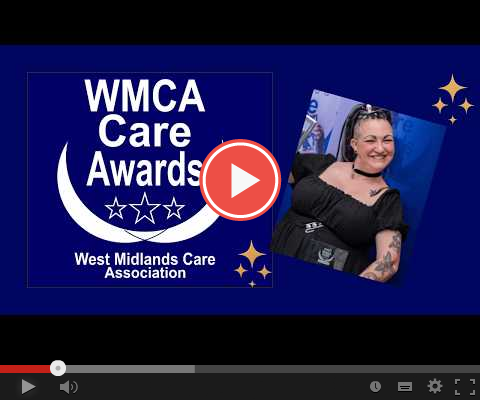
For inspiration, watch the short video below featuring Holly Holroyd — last year’s winner of the Activity Co‑ordinator category from The Forbury Residential Home. In the video, Holly shares how excited she was to be nominated, even more thrilled to be shortlisted, and how she couldn’t believe it when her name was announced as the winner — and what the recognition has meant to her. She also shows how a needs‑led, varied and meaningful activity programme can transform residents’ daily experiences.


If you know an Activity Co‑ordinator who goes above and beyond to design engaging, uplifting activities, now is the perfect time to recognise them and nominate them for an award.


Nominate a colleague today through the WMCA Care Awards 2026 .


Let’s celebrate all those in adult social care who work to make care vibrant, personal and full of life.

ActivityCo-ord
     

BBC Caring Matters Week – Catch Up On Demand

The BBC recently dedicated a full week to exploring the world of care through "Caring Matters Week" — highlighting the experiences of people who give and receive care, from families and unpaid carers to professional care workers and those drawing on care services.


The week featured documentaries, interviews, special editions of well‑known programmes and powerful real‑life stories, all aimed at improving understanding of care and celebrating the people who make it happen every day.


Although the week has now ended, all content is still available to catch up:


  • BBC iPlayer – TV programmes and documentaries

  • BBC Sounds – radio stories, interviews and discussions

  • BBC Online – articles, clips and additional resources


Click below to explore the stories, insights and guidance shared throughout the week.


📱 Empowering Residents with Android Accessibility Tools

Android devices include helpful accessibility features that support residents with sight, hearing, or mobility needs.


Key Features:

  • Select to Speak — Reads text aloud.

  • High‑Contrast Display — Makes screens easier to read.

  • Voice Access — Full voice‑controlled navigation.

  • Lookout — Describes surroundings using the camera.

  • Audio Descriptions — Adds spoken detail to TV and video.

  • Switch Access — Lets users control devices with external switches.

Most tools can be turned on in Accessibility settings. They work across Android phones, tablets, and TVs, helping residents use technology in the way that suits them best.


Learn more at Google’s Accessibility Guide or wmca.care/digital . Similar features exist on Windows and Mac.

     
https://stratus.campaign-image.eu/images/20065281358/inkcanva_32883000021538789.png

Need Help completing the DSPT?

https://stratus.campaign-image.eu/images/32883000026264003_zc_v1_1752513858450_wme___wm_social_care_international_recruitment_logo.jpg

West Midlands Care Association is your local  Better Security Better Care  support organisation, offering free online resources, workshops and one-to-one support to help CQC registered providers complete the DSPT.


We also have a new offer, a free onsite, in-person  Digital Health Check .


Click the button for more info.


For all the latest news and updates relevant to the social care sector, check out the "News and Info" section of our website.


Click for a full list of upcoming events


Our Partners

https://stratus.campaign-image.eu/images/32883000026264003_zc_v1_1746704926641_grace_cares_newsletter_ad.png
https://stratus.campaign-image.eu/images/32883000026264003_zc_v1_1775569512330_delphi_banner.png
https://stratus.campaign-image.eu/images/32883000026264003_zc_v1_1746704926641_grace_cares_newsletter_ad.png
https://stratus.campaign-image.eu/images/32883000026264003_zc_v1_1776163777641_syncurio_tile_(002).png
https://stratus.campaign-image.eu/images/32883000026264003_zc_v1_1746705362615_quality_of_care.png
https://stratus.campaign-image.eu/images/32883000026264003_zc_v1_1724925176215_wm_legal.png
https://stratus.campaign-image.eu/images/32883000026264003_zc_v1_1724925188856_hcr_law.png
https://stratus.campaign-image.eu/images/32883000026264003_zc_v1_1724925254719_spectrum.png
https://stratus.campaign-image.eu/images/32883000026264003_zc_v1_1775570123785_pharmacy_xpress_banner_(2).png
https://stratus.campaign-image.eu/images/32883000026264003_zc_v1_1746705362615_quality_of_care.png
https://stratus.campaign-image.eu/images/32883000026264003_zc_v1_1724925105724_pcs.png
https://stratus.campaign-image.eu/images/32883000026264003_zc_v1_1724925164254_citation.png
     

West Midlands Care Association  enquiries@wmca.care  01384 943000

https://campaign-image.eu/zohocampaigns/32883000002246595_1611831926057_wmca_logo.jpg
https://stratus.campaign-image.eu/images/32883000026264003_zc_v1_1753716101726_wmca_main.png
https://campaign-image.eu/zohocampaigns/32883000002246595_1611831926218_caa.jpg

Add content for your email template in this text block.

 
This email was sent by news@wmca.care to an@wmca.care
West Midlands Care Association | Globe House Park Lane Halesowen B63 2RA
West Midlands Care Association 
Authorized representativeCEO  |  Email addressenquiries@wmca.care  |  Phone01384943000

Share

July 16, 2026
Care Association Alliance sets out a national funding model for adult social care, designed to give families certainty, providers stability, and councils the resources to do their job (read the full repo rt here ) A new CAA report proposes pooling the financial risk of an ageing population nationally, rather than leaving it with 153 individual councils. The core of the model: ring-fenced national funding shared on a needs-based formula, a national tariff for care, and an independent body to keep it honest. Individuals keep a means-tested contribution, but with a lifetime cap and a raised capital threshold, so no one faces unlimited costs or has to sell their home. Councils keep assessment, planning, safeguarding and oversight, but are relieved of carrying a national demographic risk on a local budget. Backed by the Rt Hon Damian Green, Chair of the Social Care Foundation and former Deputy Prime Minister responsible for social care policy. The Care Association Alliance (CAA) has published a proposal for how England should fund adult social care for older people. Its report, Adult Social Care Funding Reform, describes a national funding settlement built on a straightforward idea: the cost of growing old and needing care is a national risk, and it should be met nationally, while care itself continues to be arranged and delivered locally. A national risk carried on local budgets At present, primary responsibility for adult social care sits with 153 local authorities under the Care Act 2014. They assess need, commission services and manage local provider markets. They also carry the full financial weight of demographic change, a pressure that is national in scale and rising quickly. The number of people aged 85 and over is projected to double within twenty years, and the Office for Budget Responsibility estimates that simply maintaining today's system will require public spending on social care to grow by 3.1 per cent a year over the next decade, compared with the 0.7 per cent average delivered between 2009/10 and 2022/23. That pressure shows up directly in the price of care. On average, councils pay £24.10 an hour for home care, while the Homecare Association puts the minimum sustainable rate at £32.14. The National Audit Office found in 2021 that authorities were commissioning care at below the sustainable cost of care, and the King's Fund reports that in 2025/26, council fee increases of around 5 per cent were outpaced by provider cost increases of 8 to 10 per cent. This is not a matter of councils choosing to underpay. It is what happens when local budgets are asked to absorb a national cost. Providers take the strain through thinner margins and deferred investment, and families often meet it through the higher fees paid by those who fund their own care, on average 41 per cent more than the council-funded rate. One settlement, built as a system The CAA argues that these are symptoms of a single structural mismatch, and that they need to be fixed together. Its proposed national funding settlement rests on three principles: pooling the financial risk of demographic change nationally, a statutory entitlement to support triggered by assessed need, and continued local delivery within a national framework. In practice, the settlement has five main components: A ring-fenced national care grant , distributed to councils on a needs-adjusted formula, so that funding follows need rather than local fiscal capacity. A reformed means test , with a raised capital threshold, frozen at £23,250 since 2010/11, and a lifetime cap on what any individual can be asked to pay. A national tariff for residential and home care , set at the independently assessed cost of sustainable provision, which councils commission at or above. A bundled funding model for residential care , with assessed packages that are portable when people move. A reformed Deferred Payment Agreement scheme , so that no one is required to sell their home to pay for residential care. Underpinning the settlement is an independent National Care Assessment Body, sitting outside both the NHS and local government, which would verify the cost evidence, review the tariff and report where provision falls short. Local authorities retain their role as commissioners and delivery leaders, close to their communities and provider markets, but are relieved of being the sole bearer of national financial risk. The report is explicit about what it does not propose. This is not a free care service on the model of the NHS, and it does not absorb social care into the health service. Individuals who can contribute to the cost of their care will continue to do so, within a reformed means test and a lifetime cap. The word national describes the funding architecture, not the way care is provided. The proposal is offered as a contribution to the Casey Commission, which is beginning to test public views on who should receive care, what the state should guarantee and what individuals should contribute. The CAA says funding reform is the necessary first step, and Adult Social Care Funding Reform is the first in a programme of papers it will publish over the coming months. Melanie Weatherley MBE, Co-Chair of the Care Association Alliance, said: “No family should receive worse care because of where they happen to live, and no provider should have to choose between keeping a contract and delivering care safely. These are not failings of the people running the system. They are what happens when a national risk is carried on local budgets. If we fund care nationally, price it honestly through a national tariff, and ask an independent body to keep it that way, we can give families certainty, providers stability, and councils the resources to do the job they are asked to do. “This paper is not a criticism of local authorities, who are doing a demanding job under real pressure. It is a practical plan to put the whole system on a sustainable footing, and we hope it is useful to Baroness Casey's commission as it begins its work.” The Rt Hon Damian Green, Chair of the Social Care Foundation and former Deputy Prime Minister responsible for social care, said: “The case for reform is widely accepted. What has been missing is a workable, affordable plan that a government of any colour could adopt. This paper offers exactly that, and a cross-party route to deliver it.” (read the full report here ) ENDS Notes to editors The Care Association Alliance is the national umbrella body for local care associations in England, a member-led organisation with more than 50 local care associations, collectively representing over 10,000 independent care providers across every English region. It is a founding participant in the Care Provider Alliance. The £24.10 per hour figure is a national average local authority domiciliary care fee, not a per-council figure. It is cited alongside the Homecare Association's minimum sustainable rate (£32.14), the National Audit Office's 2021 finding on below-sustainable-rate commissioning, and the King's Fund's 2025/26 fee-versus-cost analysis, all set out in full in Adult Social Care Funding Reform (Paper One), published [DATE] 2026. Additional figures are drawn from the Health Foundation REAL Centre, the OBR, the King's Fund, the IFS and Social Care 360. The funding-gap projection runs to 2032/33. Baroness Casey's remarks were made on 7 July 2026, in a BBC Radio 4 Today interview and a speech to the Local Government Association's annual conference, in which she confirmed the Casey Commission will begin testing the views of the public this month ahead of its first report, due this year. Spokespeople are available for interview. Media enquiries: Melanie Weatherley MBE, Co-Chair of the Care Association Alliance.
July 14, 2026
Manual Handling - Train the Trainer - Last Few Spaces - Book Now!
July 10, 2026
Digital News: Scam - be aware!
July 7, 2026
New Dates for WMCA In-House Oliver McGowan Training
July 2, 2026
Preferential Member Rates on Cyber Protection Security
June 30, 2026
One Month Left until Care Awards Nominations Window Closes
June 29, 2026
This week, we published our annual ‘Size and structure of the adult social care sector and workforce in England’ report . It provides a comprehensive overview of the size and composition of the adult social care workforce and includes information relating to workforce supply and demand, international recruitment, and statistics on the wider economy. Read more about the report in the workforce intelligence section below. The Government is seeking views on reforms to zero hours and similar contracts to implement measures in the Employment Rights Act 2025 to end one-sided flexibility. The consultation is your opportunity to share feedback on how the reforms, including the right to guaranteed hours, reasonable notice, and short notice payments, should be implemented and ensure that the views of the adult social care sector are represented. The consultation closes on Tuesday 25 August at 23:59. You can read the impact assessments on the reforms to inform your response : Impact assessment: Right to Guaranteed Hours and Impact assessment: ZHC - Right to Reasonable Notice of Shift Patterns and Payment for Shifts Cancelled, Moved or Curtailed at Short Notice
Show More