
Keiron Broadbent • October 28, 2024

A Very 'Awarding' Evening


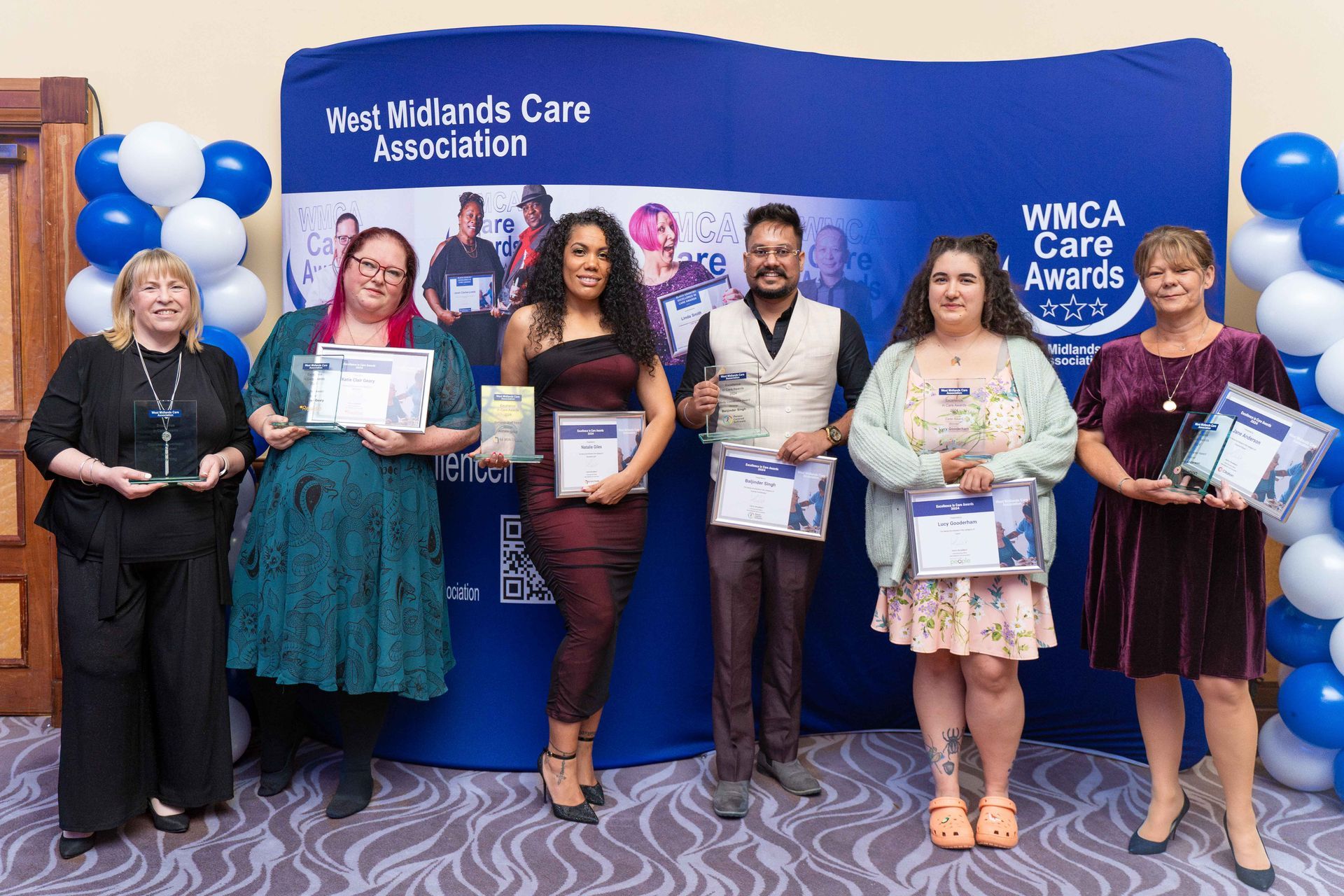
It was our pleasure last Friday (25th October) to host the seventh WMCA Excellence in Care Awards. It was a fantastic night and celebration of Adult Social Care.

We handed out 8 Awards, bringing the total number of award recipients to 46 since we started them seven years ago. Since we started we have received over 1500 nominations and have shortlisted 116 individuals for an award. We even continued the awards during the pandemic, taking them online because colleagues still wanted to nominate their friends and colleagues to recognise what they do - and that’s where we need to pause and take stock as to why we need awards.

Putting on an awards night is no easy task; it takes a lot of resource in both time and money - and I must thank my wonderful team for making it happen - but we’d never think twice about not doing it. It’s our way of saying thank you to our members, for everything they do, day in and day out. Particularly as so much of what they do goes unrecognised.

No one seeks recognition for what they do in care but it’s important that we have nights like the WMCA Excellence in Care Awards to do precisely that. 

Too much doom and gloom surrounds the sector and it’s easy to be dragged down by it. Seeing the 150 people in the room on Friday, enjoying themselves and celebrating each other reminds us that it is sector that has to be cherished.


We don’t shout out loud enough about everything that is good about Adult Social Care and I hope by putting on these awards we may have raised the volume!


Keiron Broadbent

Chief Executive Officer

West Midlands Care Association


Share

October 26, 2026
CQC publishes its annual State of Care report for 2025/26 
By Keiron Broadbent • October 21, 2026
West Midlands Care Association response to the Covid Enquiry findings
October 20, 2026
Announcing our Excellence in Care Award Winners for 2026
October 19, 2026
Care Association Alliance l aunches it's second paper on Adul t Social Care Reform This is the second paper in the Care Association Alliance’s reform programme, prepared in partnership with the Institute of Health and Social Care Management. Our first paper, Adult Social Care Funding Reform, argued that no funding model can succeed without a workforce capable of delivering it. This paper sets out what that workforce needs. It needs a recognised professional framework built on the existing Skills for Care Care Workforce Pathway, national professional levels, and a Fair Pay Agreement that is fully funded and tied to demonstrated competency. Not a new bureaucracy, and not a single national employer, but one recognised profession operating across many. The Institute of Health and Social Care Management (IHSCM) describes itself as the leading independent membership organisation for managers and leaders who plan, deliver and support health and care in the UK and internationally. Its members work across the NHS, social care, public health, and the private, voluntary and military sectors, at every level of management. It offers leadership training, a Health and Social Care Management Qualification, conferences, mentoring and special interest groups on topics including digital health and workforce wellbeing, and its history stretches back to 1902. Source: ihm.org.uk. Foreword Our first paper argued that the financial risk of growing old and needing care is a national risk, and should be managed nationally. Nothing in that argument has changed. But in the roundtables, commissioner conversations and official responses since, one theme has recurred more than any other. You can reform the money, but if you cannot recruit, keep and develop the people who deliver the care, the money will not translate into better outcomes. Adult social care fills around 1.59 million posts, across close to 19,000 employers and, on our own count of the CQC register, more than 30,000 locations. Few parts of the British economy match that scale, spread and complexity. Yet it remains one of the only workforces of its size with no nationally recognised professional framework, no consistent career ladder, and no shared understanding, in government, among the public, or within the sector itself, of what a career in care actually looks like. That has real consequences. A worker who has spent five years building genuine clinical and relational skill can move employer and start again on paper, because there is no register and no common language for what they can already do. A sector asked to take on more delegated healthcare responsibility and more complex need is paid and progressed as though none of that had changed. And an obvious opportunity goes begging: close to a million young people not in education, employment or training, against tens of thousands of unfilled care vacancies, with no bridge yet built between the two. This paper does not propose a new bureaucracy, a single national employer, or the abolition of the diversity that makes adult social care what it is, spanning home care, residential care, supported living, learning disability and mental health services, all organised differently, all needed. What we propose instead is what every other recognised profession already has: shared standards, a national pathway for progression, and a mechanism through which the Fair Pay Agreement can reward competence rather than simply raise a floor. The starting point already exists in the Skills for Care Care Workforce Pathway; it is not yet fit for that purpose, but it would not take a great deal to bring it up to speed. We have held ourselves to the same standard we asked of government in our first paper: evidence over assertion. Where we could find data to test our own arguments, including original analysis commissioned specifically for this paper, we went and found it. Where the evidence did not fully support a claim we had intended to make, we changed the claim. We publish this paper as government itself has started to speak this language. In his speech on social care on 29 July 2026, the Prime Minister said the ambition should be “to lift it up, to lift it closer to NHS standards… to integrate it more with the NHS workforce and actually to start to think about progression routes,” with care staff recognised “in terms of pay, but also in terms of training and the wider support we give them.”1 The same week, in Derby, he argued for “parity between academic and technical” routes into skilled work.2 We agree with both. This paper sets out what delivering them actually requires. England does not need a single workforce. It needs a single recognised profession. This paper sets out how to build one. Melanie Weatherley MBE Co Chair Care Association Alliance
October 19, 2026
Care Provider Alliance welcomes the start of employer nominations to the Adult Social Care Negotiating Body
October 15, 2026
Upcoming Events
October 15, 2026
Do you know who to call when cyber problems hit?
October 14, 2026
Skills for Care publishes it's annual State of the Adult Social Care and workforce in England report 2025/26
Show More